
We produce
QUALITY AT EVERY STEP
From field to finished product, we manage every step of the production process thanks to an integrated vertical supply chain that ranges from organic cultivation on our own land right through to our pharmaceutical-grade manufacturing facility. Every phase of the process is managed and certified in accordance with rigorous international standards.
THE AGRICULTURAL PHASE
We directly cultivate over 95 species across Tuscany and Umbria, which form an essential part of our raw materials.
The farming phase is key to ensuring the effectiveness, quality and standardisation of our formulations.

OUR ORGANIC CULTIVATIONS
We cultivate our land exclusively according to the organic farming method set out in Regulation (EU) 2018/848, a system of farm management defined at EU level and based on good practices relating to the environment, biodiversity, the conservation of natural resources and animal welfare.
The crops we grow on our land follow the agronomic cycles of the various species.
The entire farming process is managed in accordance with the Good Agricultural and Collection Practices (GACP) guidelines and supplemented by the expertise we have gained over 50 years of working in the sector.
OUR SUPPLY CHAIN
For certain raw materials that cannot be cultivated locally, or for specific supplies that require particular expertise, Aboca selects external suppliers.
All incoming raw materials are subject to rigorous checks, in accordance with strict quality and safety standards. For specific plants of particular interest, the company develops direct, controlled and responsible supply chains, from sowing to harvest, with particular attention to the quality of the raw materials and complete control over cultivation and processing, ensuring the highest level of traceability and operational oversight.
The supply chains we develop also prioritise respect for ecosystems and the involvement of local communities.
OUR COMMITMENT TO BIODIVERSITY
Plants, microorganisms, insects and other forms of life.
Biodiversity is nature’s life reserve and is essential to the balance of the entire ecosystem and to the health of the planet as a whole.
At Aboca, we follow the practices set out in the Organic Regulations which, in line with our status as a Benefit Corporation, commit us to minimising the negative impacts associated with our cultivation practices as far as possible, while generating positive impacts.
For example, we cultivate a wide variety of plant species, with frequent crop rotation.
The presence of spontaneous vegetation is monitored by our agronomists and, where necessary, managed through mechanical interventions, without the use of synthetic substances.
In line with this approach, some areas are left uncultivated and, wherever possible, trees and shrubs are planted along the edges of cultivated areas.
We do not carry out treatments using active ingredients with insecticidal properties and instead prioritise the use of beneficial organisms found in the agroecosystem.
Aboca’s Biodiversity Strategy sets out a monitoring system and brings together the practices and commitments established by the company to contribute to the protection and enhancement of biodiversity within its agricultural systems.
OUR BOTANICAL COLLECTION
We possess a permanent botanical collection of more than 1,000 species from all over the world, in order to identify and select the very best raw material.
This allows us to control the quality and to innovate by continuously searching for new species.
THE PHARMACEUTICAL PHASE
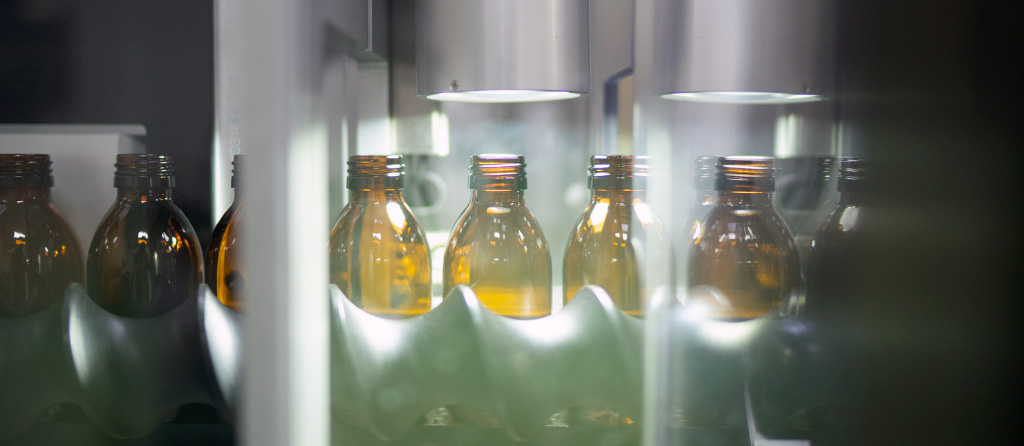
This phase allows us to obtain the natural molecular complexes that form the basis of our formulations from the raw materials harvested on our organic cultivations, thereby avoiding the use of artificial substances.
Our facilities specialise in processing natural substances to produce pharmaceutical-grade finished products.
The agricultural facility
Freshly harvested raw material arrives at our agricultural facility in Gricignano (Sansepolcro, Arezzo). The facility was created by recovering a large area that had been disused for some time and reusing some of the aggregate material from the demolition of old structures.
Inside the facility, the harvested herbs are first selected and then cut. They are then dried in 30 thermoventilated ovens at a temperature of between 45 and 60 degrees. The process can take up to 60 hours.
Factory 4.0 in Pistrino
Processing continues a few kilometres away in our Factory 4.0 at Pistrino (Citerna, Perugia).
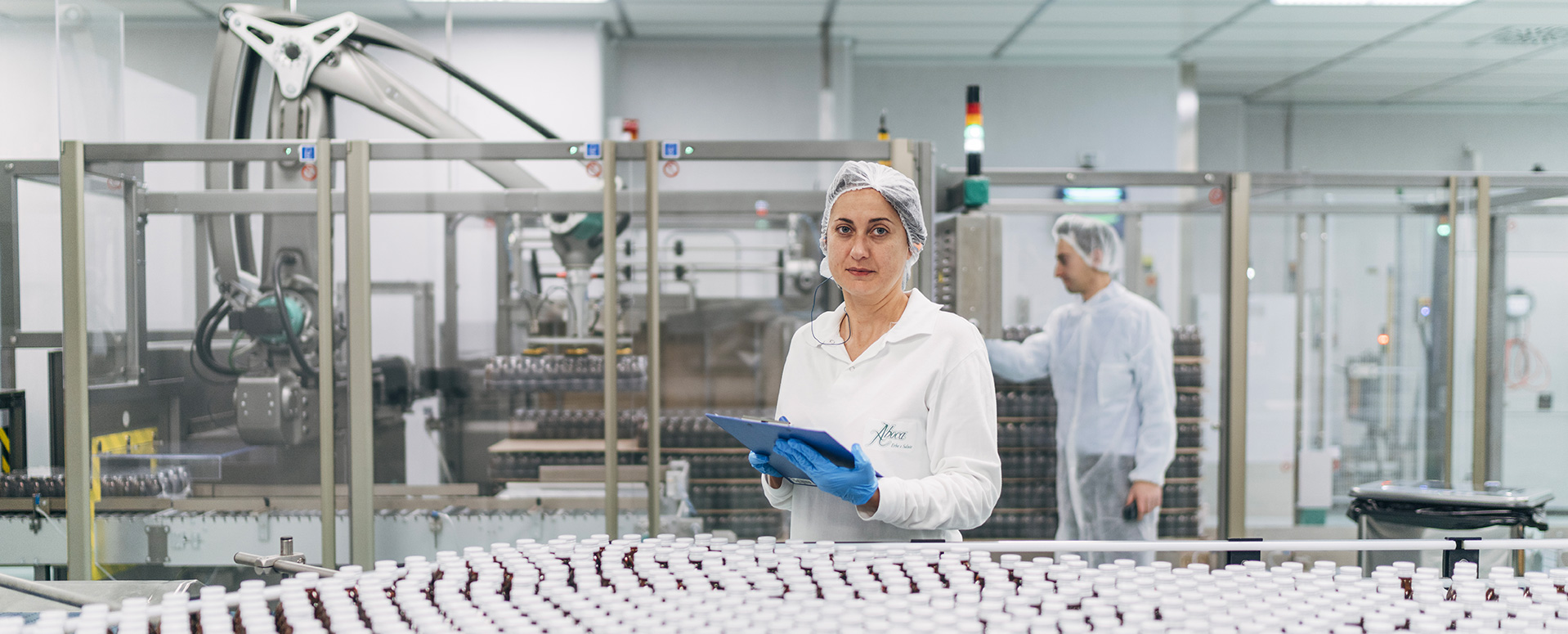
The production facility consists of several buildings covering approximately 40,000 square metres, largely made up of production areas built to cGMP pharmaceutical standards.
Here, everything is designed to ensure the maximum quality and standardisation at every step, using high levels of automation, intelligent production management software and continuous operator monitoring.
The plant houses one of the world’s largest pharmaceutical-grade extraction facilities for natural substances.
The extraction process relies on advanced technology and does not use organic solvents, but rather mixtures of water and alcohol, as well as advanced physical separation techniques such as ultrafiltration.
Each step is continuously controlled. Data is recorded on a central processing system to ensure the complete traceability of processes and products. This also allows us to verify and back-trace every single operation performed.
We produce different types of pharmaceutical forms, each in its own dedicated area: tablets, capsules, granules, ointments, gels, syrups, sprays, drops, micro-enemas and herbal teas.
Both the Pistrino production site and Aboca’s head office are ISO 14001 certified for environmental management systems.
100% FSC-certified paper
100% of Aboca’s product packaging supply chain is FSC certified.
FSC certification guarantees that the paper used for our packaging is produced in a way that respects the environment, biodiversity, and the rights of workers and local populations.
This is all part of a broader concept of sustainability: FSC-certified paper is produced without felling any primary forests and without harming any native communities or the balance of the ecosystem.